
Home Blog Page 21

ALG members address DPS board on charter schools

0

As the Denver Public Schools board prepares to vote Thursday on the renewal of contracts for more than a dozen charter schools, four members of the African Leadership Group spoke at a public comment session March 16.

ALG members expressed concern about the current board’s perceived hostility to charter schools. Here are their remarks.

Papa Dia: I appreciate the opportunity to address you tonight on an important topic. As the founder and leader of the African Leadership Group, and as a parent, I have a deep appreciation for the importance of providing educational options for our children. No two children are alike, and no one school model can accommodate the needs of all children. 

The Covid-19 pandemic and school district responses to it have demonstrated again that large systems often struggle to adapt quickly when conditions on the ground change.

These are just a couple of the reasons that I, and my organization, strongly support school choice generally, and charter schools in particular. It concerns me that some members of this school board appear to be hostile to the very idea of charter schools. While this is presented as a politically progressive position, it is in fact reactionary, and defends an unacceptable status quo for low-income families and families of color.

Instead of attempting to undermine charters, I would suggest that this board focus its attention on truly making school choice an option for all DPS families. This means figuring out how to make transportation available to all families to whatever school they choose, whether it’s a charter or a school run by the district.That would be a truly progressive step in the right direction.

As you begin the process of hiring a new superintendent, please do not make opposition to charter schools a litmus test. If you truly value educational equity, then your primary focus should be to hire a leader who wants the same variety of educational options to be available to members of my organization as to the district’s most wealthy and privileged families. 

Thank you.

Ikunda Buretta: Good evening, school board directors. I am the mother of two Denver charter school students. As such, I am dismayed at the negativity some of you display toward charter schools. I chose charter schools for my children because I believe they provide the best model of education to serve their learning styles.

To be honest, I do not care about governance models. I do not care whether the schools my children attend are overseen by an elected board like this one or the nonprofit boards that run charters. What I do care about is having options from which to choose. I have not heard from any of you a reasonable argument for why you would take away these options.

Please keep in mind that if Denver begins to limit or shut down charters, this will disproportionately affect people of color. I know you are all about equity. Why, then, would you take such a blatantly inequitable position?

Please align your rhetoric with your values and stop demeaning and threatening charter schools. Thank you.

Vivian Mensah: Good evening. I am the founder of an organization called Diversifying Our Communities.  I do not need to tell you that diversity comes in many different forms: Age, race, gender, ethnicity, culture, nationality, educational background to name but a few.

If we believe in creating a society where diversity thrives and all people are accepted for who they are, then what would cause anyone to believe that providing parents and children with a diversity of educational options would in any way be harmful? Among our children there is a diversity of learning styles. We need a diversity of school models to match the needs of our children.

High quality charter schools provide options for families that in many cases are not available in schools run by districts. The fact that they are popular with families and have long waiting lists should tell you, as school board members, everything you need to know about them.

I have heard recently that some of you have made negative statements about charter schools, and might make decisions that would make it more difficult for new charters to open and existing charters to receive contract extensions.

Of course it is your responsibility to ensure that all schools are of high quality, those run by the district as well as charters. I would not expect you to approve or keep open any school that can not perform over an extended period of time.

But to hold a prejudice against schools simply because they are charters is wrong, and does not serve the children of Denver well. Please keep open minds on this issue. Thank you.

Anne Keke: Good evening, school board members. My name is Dr. Anne Keke, and I am a public school educator at Colorado Early Colleges, a charter school in Aurora. I am here to night in my role as a member of the African Leadership Group.

I am a strong believer in school choice, and that  means I am also a strong supporter of high  quality public charter schools like the one where I teach. Denver has long been recognized nationally for its openness to charter schools, and for its rigorous process for ensuring those schools are serving students well.

I have read recently that this school board is considering changes to that rigorous authorizing system, and is also far more skeptical of charter schools than past boards have been. I find this both sad and puzzling. I admire your often-stated commitment to equity, and so I wonder how you reconcile these two conflicting positions.

To me, one of the cornerstones of equity is that all people, regardless of background, have equivalent access to educational opportunities. Obviously not everyone is going to be able to afford Kent Denver of Colorado Academy. But should people for whom elite private schools are out of financial reach have no options open to them?

Denver is rich with high quality charter schools, as well as a wide range of excellent district-run schools. Why would you even consider depriving the very people who are most in need of viable options for their children of a chance to choose the model that would work best for them?

Please do not develop reflexively anti-charter positions or policies. This pandemic is almost over. As soon as possible, please spend some time visiting some of your charter schools, and please, keep an open mind.

Thank you.

Get your questions answered about Covid-19 vaccines!

0
SARS-COV-2 COVID-19 Coronavirus Vaccine Mass Production in Laboratory, Bottles with Branded Labels Move on Pharmaceutical Conveyor Belt in Research Lab. Medicine Against SARS-CoV-2.

The African Leadership Group will hold a Covid-19 Vaccination Educational Forum in early April, and we want to know what questions you have for the health experts who will be attending.
The virtual event will be held Saturday April 3 from 3 p.m. to 5 p.m.

Among those presenting at the event will be representatives of STRIDE Community Health Center and the Colorado Black Health Collaborative.

What questions, doubts, reservations might you have about the three Covid vaccinations currently available from Pfizer, Moderna, and Johnson & Johnson? This is your chance to get those questions answered by one of the state’s foremost experts.

Here are a few sample questions to give you some ideas:

  • Which vaccines is the state using in its clinics?
  • Why do some of the vaccines — Pfizer and Moderna — require two doses, while Johnson & Johnson requires only one?
  • Are some vaccines better than others? Which ones?
  • Are the vaccines safe?
  • What kind of side effects do people get from the vaccines?
  • What are state officials doing in terms of outreach to communities of color to make sure vaccines are available to everyone?
  • What are the biggest obstacles to reaching some communities?

You can email your questions to us atinfo@usalg.org. Or you can put your questions in a comment at the bottom of this article.

As more students fall behind, a consensus is emerging on how to help them catch up

0

This article was written by Papa Dia, founder and executive director of the African Leadership Group, State Senator Rhonda Fields, an Aurora Democrat, and State Senator Bob Gardner, a Colorado Springs Republican.

For a generation of educators and policymakers here in Colorado, the wide gap in educational outcomes and enrichment opportunities between the rich and poor, suburban and rural communities, urban and gentrified neighborhoods have been a cause of great frustration and grave worry. It is unacceptable, yet it remains.

Our kids are falling behind, especially low-income students, and COVID made it worse. The time to act is now. This November we have an opportunity to close the gap for Colorado kids.

The problem is clear: Colorado schoolchildren have fallen behind in reading, math, science and writing – particularly students of color or those from low-income families. On the most recent national tests, only about 40 percent of Colorado’s 4th graders were proficient in reading, with only 22 percent of low-income students scoring proficient or higher.

We aren’t just picking on fourth graders; when you look at Colorado students in grades three through eight, more than half fail to meet grade-level expectations in reading, writing, or math on state tests. The one constant? Glaring disparities based on income, race, and geography; we have to end this, those factors cannot be allowed to dictate success any longer.

In an era when Democrats and Republicans can’t seem to agree on much anything, we believe that attacking the root causes of this gap is something that we can and must do together. On the heels of COVID and school closures,  closing the gap has taken on a special kind of urgency. Now is the time to take the first step, because the future of so many young people is on the line. 

That’s why we have signed on as early supporters of a proposed ballot initiative that would provide funding for families to choose from a menu of approved out-of-school learning providers, including tutoring in reading, math, science, and writing, extra services for special needs students, and career and technical education-training programs.

This fall, Coloradans can do something about it, they can close the achievement and enrichment gap by supporting a ballot initiative that will work alongside K-12. The Learning Enrichment and Academic Progress (LEAP) Program would be funded by a 5 percent sales tax increase on recreational marijuana and revenue from agricultural, mineral, and renewable energy development on state land.

This measure has been carefully crafted by experts from across the state to address the most pressing needs our students face. If passed, it will provide equity and flexibility for Colorado’s K-12 students so they can sharpen their skills and add new ones.

The $1,500 in annual funding for out-of-school instruction is a game-changer. That funding could be used for a variety of opportunities, including tutoring for reading, math, and science, as well as support for students with special needs and enrichment activities.

All Colorado students would be eligible, and the most under-resourced students would be prioritized.

As students, teachers, and families grapple with online learning, hybrid models and the slow return to in-person instruction because of the pandemic, the need to provide our students with tutoring, supplemental instruction, and enrichment programming intensifies.

The measure has earned early support from dozens community leaders from across Colorado as well as heavyweights from education and policy circles, including Senator James Coleman (D-Denver), Senator Paul Lundeen (R-Monument), former Senator and State Treasurer Mark Hillman, CEO of Gary Community Investments and former Senator Mike Johnston, Colorado Alliance for Environmental Education and Thorne Nature Experience.

In the end, this issue transcends nearly every political, geographic, economic, and racial group, and should be able to find broad support at the polls.

The LEAP Program won’t just benefit students, though that is without question the primary goal. It will also benefit our teachers – who can receive additional compensation providing supplemental services during non-school hours; our students will be, in greater numbers, ready to learn or able to seek help when needed; our employers will find a better-educated pool of prospective employers.

If this measure passes, there will be more work to do. But we must recognize this moment and seize the opportunity to make a difference in the lives of our kids; they are the future. So, let’s get to work with fresh resolve and common purpose.

ALG holds high-spirited celebration of International Women’s Day

0

The pandemic might keep us physically apart for a little while longer, but spiritually we remain bound together. 

That fact was made clear yet again when the African Leadership Group conducted a high-spirited virtual celebration of International Women’s Day on Saturday March 6.

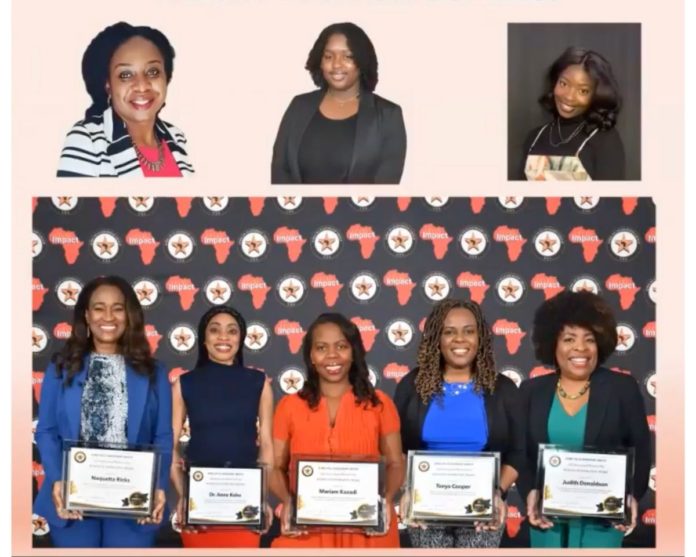
The event, held over Zoom and Facebook Live, attracted well over 100 people from across the country and from overseas as well. There was music and laughter. There were moving speeches, and the honoring of five local women as “Women of Inspiration.”

“Women’s empowerment is near and dear to my heart,” Tonya Cooper, interim chair of ALG’s Women Empowerment Committee. “There are powerful women doing amazing things in the community.”

The five Women of Inspiration honorees were:

  • State Representative Naquetta Ricks, the first African immigrant elected to the state legislature. “Nothing is impossible and if you work hard you can achieve anything,” Ricks said. “I ran three times to get here. It took me seven years. People thought it was impossible.”
  • Dr. Anne Keke,  an instructor of languages and Restorative Justice Coordinator with the Colorado Early Colleges and a native of Ivory Coast. “My motto in life is every no gets you closer to your yes,” she said. “It really does take a village. A village stood by me. That village is the ALG platform, the ALG community. So it is only normal that I give back, that I pay forward.”
  • Tonya Cooper, a native of the Bahamas who has become an integral member of the ALG community. She had a challenging year even by 2020 standards, with health problems and a child born prematurely. “The support and encouragement the ALG community provided to me and my family was truly overwhelming,” she said.
  • Mariam Kazadi, an author, speaker, and cofounder of the BBLK app, described as “GPS for finding Black-owned businesses. In her talk she encouraged young women to begin developing skills at an early age. “Engage with other women and support and celebrate one another. Now is the time for us to create our own table and pull up a seat at the table.”
  • Judith Donaldson, an ALG board member who immigrated to the U.S. from Jamaica in 1980. She is an assistant vice president at KeyBank and was an early mentor to ALG founder Papa Dia. “Surround yourself with people who share similar interests,” she said. “Don’t be afraid to go outside your comfort zone.”

Other inspirational moments spiced the evening as well. Rhama Ndao, a brilliant Senegalese immigrant, spoke of how her high academic achievements were made possible not only by her innate intelligence but by a supportive community. She urged parents to be supportive of their children, and to encourage rather than reprimand them when they fall short of a goal. And to young people, she advised: “If people are willing to help you, you have the responsibility to accept that help.”

Mariem Dia, an active member of the ALG community, described how she started her business, Mariem’s Magnifique Collections, during the pandemic and has seen it grow over the course of the year. Mariem, a freshman at Colorado Early Colleges of Aurora, She said having her community and her parents by her slide made her early success possible.

The event culminated with a powerful keynote address by Ikunda Buretta, known to the ALG community as Mama Africa. Originally from Tanzania, Mama Africa has lived in Denver for the past 20 years. She centered her talk on the importance of choosing life even amid the multiple challenges of living through a pandemic. 

“We have lost jobs, lives, businesses. But we are making a conscious decision to choose life,” she said. Women have faced especially tough challenges during the pandemic, because in many cases they earn less than men, and therefore when families had to choose who would stay home with children unable to attend school, that duty often fell to women.

“Dreams were shattered. Promotions diminished,” Mama Africa said. Mental health strains often become nearly unbearable. “There has been so much pain in our communities,” she said.

And she finished on an upbeat note: “Tonight despite everything that has happened, as we celebrate International Women’s Day, choose life!”

The challenges of remote learning: A parent’s perspective

0

This article was written by Samba Guisse. Mr. Guisse is a refugee from Mauritania, a single parent of two sons. He is a hard-working man and an education advocate within the Mauritanian and Senegalese community.

Reflecting on this past year, it has been tough for me and my family. It was hard working and trying to navigate my son’s online school. 

It was tough for me because I lost my job early last year due to the pandemic, I was furloughed and had to apply for unemployment.  It was hard applying for unemployment because the system kept logging out, and it took me several days to input all the information. When I finally received my first payment it was a breakthrough.  

At the same time, I had to provide for two kids, one in 8th grade in Denver Public Schools and the other in his first year in college. When DPS moved to online school it was hard at first for me and my son. We had a lot of internet issues and connection issues due to not having a stable network. The school was able to provide us with hotspots which really helped me.  

At the beginning of this school year, it was a struggle for me and my son. I had a hard time trying to help him with his schoolwork, because my English is not very good, and I never had any form of education. I knew he was falling behind because teachers were calling and telling me he was not doing his work. 

When I asked him why he wasn’t doing his work, he would tell me he didn’t understand, or he wasn’t receiving the help he had pre-covid. It really was frustrating for me as I felt like I could not assist him at all, and he was falling far behind. 

What really helped me was Ousman Ba and the African Leadership Group. I was struggling, and I reached out to Ousman, a family friend, to see if there was any way he could assist me. Ousman told me about the pandemic pod ALG was running, I enrolled my son as soon as possible.  

Once he enrolled, I saw the shift in his grades and received fewer calls from the school. 

Now my son is back to in-person school and doing better.

An apple a day does not keep mental illness at bay!

0
'Seriti.' From "Abstract Peaces," 2016. IMAGE: COURTESY OF TSOKU MAELA

After a chance meeting with a stranger, I began to ponder if this principle is one we could apply to our mental wellness. Having bumped into Maegan Yoder, a licensed mental health nurse in Pueblo, Colorado, I was left restless with many thoughts running wild.

Surprisingly, Kanye West’s recent mental health struggles came to mind and how this was the reality for many Africans in America today. So, why is mental health still such a testy topic for many? 

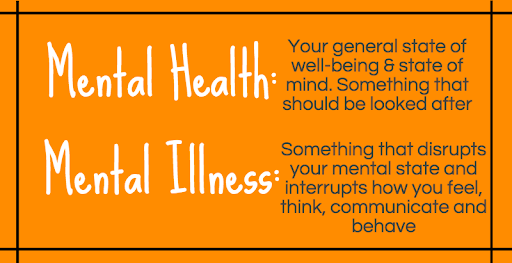
Before diving further into our conversation, I would like to explain what exactly mental illness is and why in fact an apple a day will not keep mental illness at bay. 

According to the World Health Organization (WHO), mental health is “a state of well-being in which the individual realizes his or her own abilities, can cope with the normal stresses of life, can work productively and fruitfully, and is able to make a contribution to his or her community.”

After speaking with a much dedicated Maegan and also having done a great deal of research, I discovered that mental illness in the African American community is deeply complex, primarily due to factors beyond any individual’s control. 

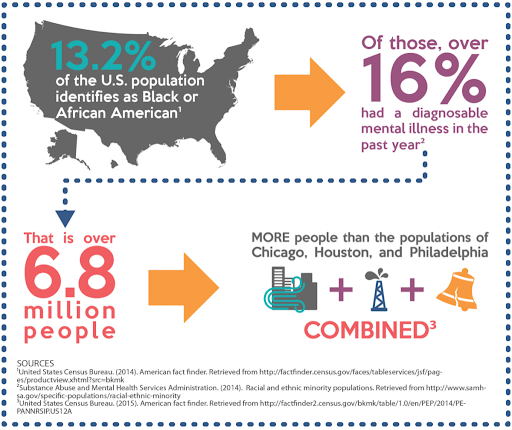
Many people do not realize how common mental illness is in their community. According to Maegan, this is due to the lack of awareness, knowledge, and information that is in fact not provided to people of color. 

Maegan found that in her experience, mental health services are not only inadequately set up for the challenges presented by the African community. However, the ignorance and bias of some mental health professionals bleeds into the care that is provided to patients. 

Her reflections shine light on factors that many others will never experience just because of the color of their skin. She believes these are the main problems people face at the hands of professionals:

  • Many professionals failed to simply care and be humane. 
  • “Pain” was not taken seriously.
  • African Americans were “weak” and just could not handle everyday stressors.
  • Mental health concerns were more likely to be ignored and dismissed. 
  • Men were under-diagnosed due to toxic masculinity.
  • People were not heard or validated for their feelings or experiences. 
  • People seeking help were undermined and commonly misdiagnosed because of personal biases.
  • A lack of empathy and compassion during training led to a cold, dispassionate service.

Considering the number of people who are unwell, this is a disappointing discovery. However, Meagan also pointed out how her patients faced barriers that compounded their problems. Beyond, the lack of awareness, she noted that during her sessions many clients presented with the following: 

  • The belief that they should be ashamed for being unwell or for asking for help.
  • The idea that “mental illness” had a stigma attached to it, and they were weak for not being able to handle their “business” behind closed doors. 
  • Judgments and self-help advice given by family and friends, usually undermined the individuals, creating further isolation and distress. 
  • The misconception that “you will get over it, if you toughen up”. 
  • Feelings of inferiority and being useless.
  • The lack of resources in the area. 
  • Mental health services are staffed by white American providers who do not allow for trust to build or heal the painful history with the medical profession.

Mostly, Maegan reflected that without adequate education and confidence, people are stuck in a vicious cycle, where they cannot distinguish between a healthy and unhealthy state of mind. With all this in mind, it isn’t unsurprising that people lack the ability to advocate for better care. 

This at its core challenges us to look within ourselves to see why someone ” supposedly different” is not worthy of the same quality of care. I think the historical manifestations of slavery and the stripping down of identity, power and self-worth is where the real problems exist. Repairing these harms requires compassionate and kind medical professionals, therapists, and mental health practitioners. 

For those of us, who have been shamed for feeling mentally unwell, I think it is time to be honest with ourselves. Why do we choose to suffer? And who controls our narrative? With the help of Meagan, here are few things to remember:

  • Mental illness that affects your brain chemistry will not heal without medication.
  • If you are willing to take your asthma medication, then why are psych medications any different?
  • If your symptoms remain unchanged or get worse after a two-week period, then you need to seek help. 
  • You are not alone, and this will not go away by itself. 
  • Learning coping mechanisms is not a hindrance. 
  • Keep asking questions and DO NOT stop until your voice is heard. 
  • Your family and friends may have your best interest at heart but they do not know your pain.
  • Trust your feelings. 
  • You deserve the best care regardless of what anyone else is telling you. 
  • Empowering yourself is the only way to control your narrative.
‘Mood.’ From “Emotion Series,” 2016. IMAGE: COURTESY OF KIRSTY LATOYA

With all this in mind, I would like to say that an apple a day may keep you healthy in many ways. It will not, however, eradicate your mental health problems. This undoubtedly is a challenge because of poverty, discrimination, poor education, and professional biases. However, even with these obstacles, we must be aware that no one can advocate for our wellness- only we can. If we do not believe we deserve to be treated with respect and kindness we will not be. This is your act of kindness, please seek help, keep making noise until you receive the care you deserve. This is a collective call to break the shackles of the past and live a healthy, happy life. 

Please watch this video. It will help you:


Summary of ALG’s Business & Economic Opportunity event

0

The African Leadership Group’s Business Economic Opportunity Committee held a business forum via Zoom on Thursday, January 28th from 6 p.m. to 7:30 p.m.  The event was organized to provide the community with professional insights and first-hand accounts of starting, growing, and maintaining a successful business.

The event began with an introduction and overview by Papa Dia, President/Founder of ALG. Next, Solomon Muwanga, Committee Chairman, provided a brief overview of the Business & Economic Opportunity Committee and its members, followed by an introduction of the event’s speakers.

Outlined below is a brief overview of the speakers as well as the topic and subject matter discussed by each professional:

  1. Fundamentals of Building and Growing a Successful Business
  • Jamal Bowen* – Business Professor | Community College of Denver; Founder | Empowering Community Entrepreneurs. Bowen discussed crafting an effective Business Plan and the key components of operating a successful business.
  1. Legal Aspects of Starting a Business
  • Tayo Okunade – Attorney/Owner | Okunade LLP. Okunade described the pros and cons of various types of business entities and fundamental legal consideration when starting a business.
  1. Business Success Story Highlight
  • Patrick Tcheunou – Owner | Chocolates Bibamba (introduction presented by Marisela Parraguez – Project Manager | World Trade Center Denver). Tcheunou gave a first-hand account of starting and growing his own successful artisan chocolate business. Watch the video embedded below for a news story about Patrick’s business.
  1. Upcoming Virtual Events – The event concluded with an outline of upcoming events, including ALG’s monthly legal clinic and the next Business & Economic Opportunity Committee event.

Two raffles were also held as part of the event with gifts of cash and in kind donated by presenters and awarded to the lucky winner. The event concluded with final words of thanks to participants and panelists from Papa Dia.

ALG would like to extend sincere congratulations to Jamal Bowen for his promotion to Chair of Advanced Academic Achievement (AAA) at the Community College of Denver.

What I didn’t learn about Black history in high school

0

My family immigrated to the United States in 2000 as refugees from Senegal. Like many immigrants, my family came here for safety, freedom and opportunity.

Before we migrated, we would hear stories about the “American Dream,” and we got a lot information from American media like TV shows and movies, which portray America as this great country with no faults.

When we arrived in America, we often found ourselves realizing our dreams were further out of reach than we imagined. The life of an immigrant isn’t an easy one.

Why? Because sometimes there is a lot of discrimination. Sometimes it’s hard for us to find good jobs, and navigating new systems and customs can be challenging. But I admire many immigrants like my family who struggle and show that they are capable of getting ahead.

For me, some of that struggle in my early years was the language barrier and speaking with an accent. Sometimes, a lot of young immigrants are bullied for not speaking the language.

However, as immigrants we persevere, and we keep fighting for the dreams that inspired us to cross oceans and continents to be here.

On the other hand, what immigrants don’t always fully appreciate is that many native-born Americans have had to fight just as hard and struggle just as much for safety, freedom, opportunity, and family. Throughout American history, no group has had a greater struggle than African Americans.

I challenge my fellow immigrants to develop an understanding of oppression that Black Americans face in this country. I believe it starts with education.

My K-12 education in Denver Public Schools failed me on Black history. I didn’t realize this until I took my ethnic studies course in college.

Black history in K-12 was taught to me through the eyes of the oppressor, only highlighting a few Black figures considered American patriots. The only figures we learned about were Martin Luther King Jr., Rosa Parks, and Harriet Tubman. The rest of the teachings were about slavery.

Even when we learned about these prominent figures it was through the lens of the oppressor. The material didn’t capture the whole story of these great leaders. In fact, slavery was often glorified in some of the textbooks.

However, in my ethnic studies course in college I learned about other great leaders like Malcolm X, Angela Davis, and Nat Turner. These are the type figures I wish I was taught in Black history in K-12 education. These leaders were revolutionary.

That’s why I believe every Black student should learn about them in K-12; to get a holistic view of Black history in this country. I wish I had learned about Black history pre-slavery and how Black kings and queens oversaw kingdoms all across Africa.

In addition to that, I believe this shouldn’t be just limited to Black students, I believe other students from different races should learn about this as well. They should be thinking about oppression, white privilege and dismantling it.

All in all, I believe teaching Black history should go beyond Black history month by adding it as a curriculum requirement for K-12.

It’s the people who make ALG’s public speaking class a life-changing experience

0

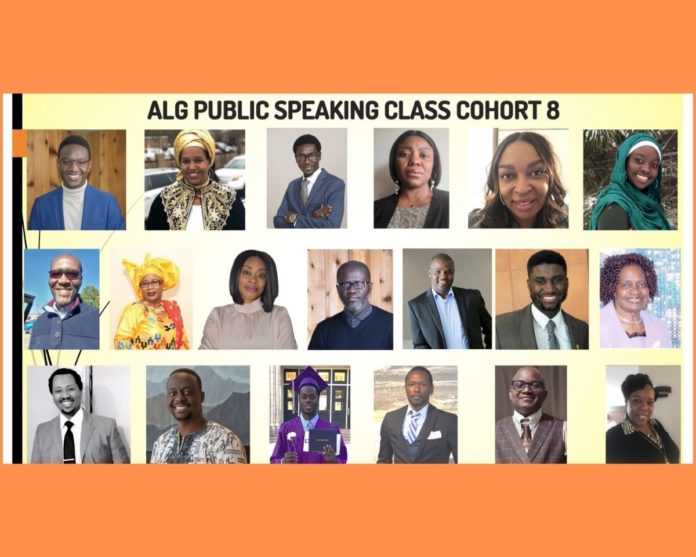
The African Leadership Group recently concluded its eighth public speaking course, and marked the occasion with a wonderful graduation ceremony over Zoom and Facebook Live.

Well over 140 people participated, from across the country and overseas, silently observing, and supporting the graduates, many of whom they had never met. It was a great success.

The public speaking class has become an important part of ALG’s programming. There are many people to thank for its success.

First and most important, I would like to thank the Honorable Cheikh Niang, Senegal’s ambassador to the United Nations, for his gracious and heartfelt opening remarks, which you can read and listen to here. Ambassador, for you, with your busy schedule, to attend and not only celebrate with us but to offer a very impactful message, fills us with gratitude. Humble thanks to you, sir.

Next, I must thank the professor, Madiama Mbaye, who has dedicated so many hours to leading this program over the past five years. Professor, you have always expressed so much joy in this work. No matter how busy you might be, you have never seemed tired, and for your work in this class, which transforms lives, only God can reward you.

To Dr. Anne Keke and Ousman Ba, who acted as co-facilitators, many thanks as well.

And of course, thanks most of all to the students, who make this class what it is. Any current or former public speaking student will tell you that the name of the class does not begin to capture its content or its live-changing nature. It is more of an empowerment class than a public speaking class. It changes lives. Sometimes it feels more like being in a mosque or church than in a class, with someone preaching to you and praying for and with you.

I also want to emphasize that this class is not only for members of the African immigrant community. Our students have been very diverse. Yes, there have been many immigrants from sub-Saharan Africa. But there have also been North Africans, African Americans, and Caucasians participating. And this diversity has enriched the program immeasurably.

Our next public speaking classes begins soon, and I urge everyone reading this to register and participate.

Senegal’s U.N. ambassador lauds ALG public speaking graduates

0

The Honorable Cheikh Niang,Senegal’s ambassador to the United Nations, attended via Zoom the recent graduation of African Leadership Group’s eighth Public Speaking class. His heartfelt remarks moved everyone who heard them. Below you will find the full text of his remarks, as well as a video of the talk. Enjoy the ambassador’s moving speech!


Dear CEO and Staff members of ALG,
Dear graduates,
Dear friends,

First of all, let me say how happy and proud I feel to participate in this event. I warmly thank the CEO and Leadership of ALG for their invitation and congratulate them on the development of this important training program.

As for you, dear graduates, I applaud you for successfully completing your training. You have been given the tools and skills you need. Now you have to put these skills to test and make good use of them. As you know, practice makes perfect. And remember that proper and well led communication is crucial in human interactions and if one wants to thrive in society.

Before getting to the heart of the matter, allow me to introduce myself. My name is Cheikh Niang. I am a Senegalese career diplomat. Born and raised in Senegal where I studied from primary school to university.

In terms of my current professional duties, since July 2018, I am the Ambassador of Senegal to the United Nations.

I started my diplomatic career in the early 90s at the Senegalese Ministry of Foreign Affairs as Head of the Africa Division. In 1995, I had the privilege of being appointed to the Presidency of Senegal, in Dakar, as Diplomatic Advisor to the President of the Republic, for 5 years.

My first posting abroad was in New York where I arrived in 2001. There, I was, first, Minister Counsellor at the Senegalese Mission to the United Nations in New York for 5 years, then Consul General with a jurisdiction covering the whole United States for 4 years.

Then, in 2010, I was appointed for two years as Ambassador of Senegal to South Africa, with residence in Pretoria. At that position, my jurisdiction included other countries in Southern and Eastern Africa (such as Namibia, Botswana, Zimbabwe, Mozambique, etc.).

After serving in South Africa, I was re-appointed to the US, for another 2 years; but that new tour of duty which started in 2012 led me to Washington DC, as Ambassador of Senegal to the United States; and I was concurrently appointed to Mexico, Paraguay, Uruguay and Panama.

After Washington DC, I was sent to Japan, as Ambassador. While I was in Tokyo, I was also the Ambassador of Senegal to Australia, New Zealand, Indonesia, Vietnam and Cambodia.

In my travels and in my contacts with others, I have always been profoundly aware of my true self: i.e. a Senegalese, an African. Aware that I have the sacred duty to always do honor to my country and my Continent, through my conduct and my everyday actions. Because in my view, it is very important in life to clearly set one’s marks and forge one’s self-motivation.

Indeed, I held these beliefs because I truly value African pride and personality, influenced as I have been by the writings and actions of Cheikh Anta Diop, Kwameh Nkrumah and other illustrious African figures.

Indeed, as a Senegalese and an African, I am proud to belong to a Continent that had a glorious past, but also (all current surveys lead to that conclusion) a Continent set to embrace a bright future.

When I speak of our glorious past, I think of the Africa of Kankan Moussa, Nelson Mandela, Kwame Krumah, Julius Nyerere, Patrice Lumumba…I also think of a Continent where flourished affluent empires and kingdoms, before the doom brought by the invading Europeans. And when I talk about its bright future, I think of the inevitable African Renaissance that is now taking shape before our eyes.

For it is obvious that Africa is today the last frontier. And there is no doubt that after the time of the West and that of the Asian Tigers, the time of Africa is imminent. A time that will enable us to witness a new and more prosperous Africa.

But let me now be less aloof and give you a peep at my personal journey.

And I will narrate here an earlier sequence in my life, when I was much younger. A life sequence that is certainly similar, in many respects, to yours, dear graduates. Because I guess that the feelings I experienced then must be similar to what you live now.

I had just completed my master’s degree at the English Department of the University of Dakar. At that time, the British Council used to select every year a number of Senegalese students with a master’s degree in English to send them to England for a one year stay. A year to perfect their English, but also a year where they would be employed in British high schools as French Assistants.

It was the first time I had been out of Senegal. So for the first time, I flew. And the plane landed at Heathrow Airport in London at dawn. From there I had to catch the bus to travel to the remote city of my destination, Scunthorpe, in the north east of England.

I arrived in December. In the middle of winter.
Imagine the shock. Weather shock: the severe cold that I was feeling in my flesh. Born in the heat of the Sahel , I arrived in London in December in an icy weather. I wore a coat but it was useless as I felt the cold in my bones.

Everything was hard and new to me. Everything was foreign to me.
Not only the weather. But also the food, the attitude of the people, the culture. Almost everything.

I suddenly realized that as much as everything seems to be in place when you are at home, you can, in equal measure, quickly lose your bearings abroad and develop fears.

Fear of being rejected by people with whom you apparently don’t have much in common. Fear of not being up to the task. Fear of not being understood. Fear of being bored to death. A very disturbing psychological shock!

So, all of a sudden you have all these shocks colliding in you: physical shock, psychological shock, culture shock, language shock. Which is a lot for a newcomer!

In such a situation, you are faced with two scenarios:
-Either fear dominates you and you literally exclude yourself from society;
-or you put things into perspective, learn to adapt and then you are set to enjoy a fulfilling stay.

As a matter of fact, if you are transplanted in a foreign land, the worst thing that can happen to you is to believe that you are so different that whatever you say or do is inacceptable to the people of the land.

For the truth is that even though we were born in different environments, even though we have started out with different cultures, what is constant is that we all have humanity in common. Subjected to the same imperatives. To the same desires. To the same ambitions. Endowed with the same potential to live the life we want. Therefore, we must believe in ourselves. Believe in our abilities. Be convinced that self-censorship hinders, and that optimism not only elevates, but liberates.

Indeed, when we choose to leave our country, the goal is often to enrich and promote ourselves and, if need be, bring back home what we have learned or gained. It is therefore in essence a noble undertaking.

But to succeed, one must have this conquering spirit, the desire to explore and be relevant.
It therefore requires obvious qualities. Self-confidence. It requires a state of mind. You need to recognize that, because you have a personal and different journey, you are shaped by distinct cultural traits, and even by a distinct accent. All that background will follow you. That is your “trademark”, your idiosyncratic marker.

So what you have to do, is accept who you are. Love it. Accept it. And thereon, go and reach out to the other. To enrich your neighbor and be enriched by him or her.

And believe me, I’ve been to so many countries, but I have not seen, outside Africa, a country more inclusive and welcoming than the United States.

The main reason is that migration is part of the DNA of this country which has been built by migrants hailing from all over the world. Therefore there is some kind of playing level field here.

In a country of migrants, all migrants are equal. In opportunities. Perhaps the only area where one can temporarily lag behind is language. The other one, in some cases, is accent. (When one’s primary tongue is not English. ) But whatever the foreign language, you can always learn it and perfect it. So is the case for the accent.

And actually accent has not prevented migrants to be successful in this country. I can name some famous Americans who, with their foreign accent, fared very well. Just to name a few: Henry Kissinger, Secretary of State; Albert Einstein, physicist; Arnold Schwarzenegger, Actor and Governor; Akon, singer from Senegal, etc.

This is my take:
1- Always perfect your English. (This is even true for natives)
2- Speak with your accent if you are comfortable with it.
3- But if you are unhappy with it, learn to adjust it to the one which pleases you.

But, ultimately, what is really important is to make yourself understood. And to avoid setting up psychological barriers which would bar you from being an effective member of your community and that would in the end alienate you and obstruct your progress towards full self-realization.

And whatever the situation you are in, always remember this inspiring reflection of a Roman writer, who was actually an Roman African writer. His name is TERENCE. And he made this powerful assertion:
“I am a man, and I hold that nothing human is foreign to me.”

Thank you for your attention.