Home Blog

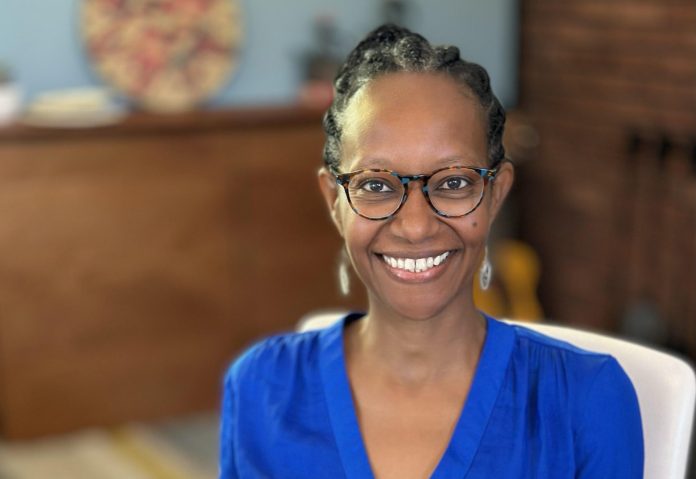
Meet Dr. Amen Sergew, Leadership Africa Cohort 6

0

Editor’s note: The following article was written by Dr. Amen Sergew, a member of Leadership Africa Cohort 6

Growing up in Ethiopia shaped me in profound ways. I was raised by a remarkable family.

My father was a historian and deeply patriotic. My mother, whom I would describe as overflowing with love, instilled in us a strong moral compass. My older sister is a creative force who marches fiercely to her own rhythm.

My three older brothers taught me resilience and how to regulate my emotions when it mattered. My grandmother, the family matriarch, demonstrated what it meant to build and run successful businesses and manage real estate through sheer wisdom and determination despite being unable to read or write. She kept the books all in her head.

In 1987, I moved to the United States at the age of thirteen. African immigrants were a rare presence in my adopted community. Much of what people understood about Africa, and Ethiopia specifically, was filtered through narrow media portrayals, often centered on famine and hardship. This created a stark disconnect between my lived experience and how others perceived me.

That gap became a defining force in my life. It cultivated resilience, independence, and the ability to navigate different cultural contexts. As a newcomer navigating the margins, I learned to be comfortable in unfamiliar and uncomfortable spaces. I came to believe that something sacred and beautiful lives in every human interaction, though it may not always be easy to see.

At the same time, I became introspective and philosophical, grappling with questions of history, recognition, and meaning. If Ethiopia’s rich and ancient history is not widely known, does that diminish its significance? Does a story require recognition to be legitimate?

These reflections deepened my sense of self. I came to understand that identity is not contingent on recognition by others, but rather grounded in self-awareness and internal validation.

Over time, I have come to appreciate just how difficult that early transition was. Arriving in a new country at a formative age brought challenges including poverty, invisibility, and being underestimated.  Yet those experiences became a crucible that sharpened my perspective and strengthened my resolve. I drew inspiration from my family and Ethiopian ancestors, as well as from the legacy of African Americans whose struggles and achievements expanded opportunity for others.

With determination and support, I pursued higher education, ultimately attending medical school and specializing in Pulmonary and Critical Care Medicine. My career in academic medicine has spanned many years, during which I developed clinical expertise and a broader understanding of patient care.

Along the way, I built a life with a kind and thoughtful husband who has been a steady source of support and comes from a line of curious and inclusive Americans. I am also grateful for my stepdaughter, who has embraced me with openness and joy despite our different backgrounds.

Now, at mid-career, I am stepping into a new chapter that integrates the full arc of my personal and professional journey.

I recently founded Integrative Pulmonary Clinic, a practice grounded in combining Eastern and Western approaches to care, particularly for patients with lung disease. My approach emphasizes hope and patient empowerment, guided by the words of Hippocrates, the ancient Greek physician, that “the natural healing force within each one of us is the greatest force in getting well.”

This new venture brings both excitement and challenges. Entrepreneurship has pushed me to think differently, to build something aligned with my values, and to reimagine what healthcare can look like on a more intentional scale. In many ways, the clinic represents a microcosm of my broader vision for medicine in the United States, one that not only incorporates advanced treatments while also prioritizing “healthspan” (a long and healthy life) inspired by the wisdom of community, culture, and the natural world.

As I step into this next phase, I am committed to continued learning, growth, and collaboration.

Joining the new cohort of Leadership Africa represents an opportunity to engage with peers and mentors who share a commitment to impact and leadership. The kick-off sessions were thoughtfully planned and executed to create kinship and connection while equipping us with tools that strengthen our capabilities and address our weaknesses.

In the coming months, I will approach our time with humility and clarity of purpose, seeking both to contribute and to evolve. For me, each day remains an opportunity for self-healing, reflection, and the possibility of building something that matters.
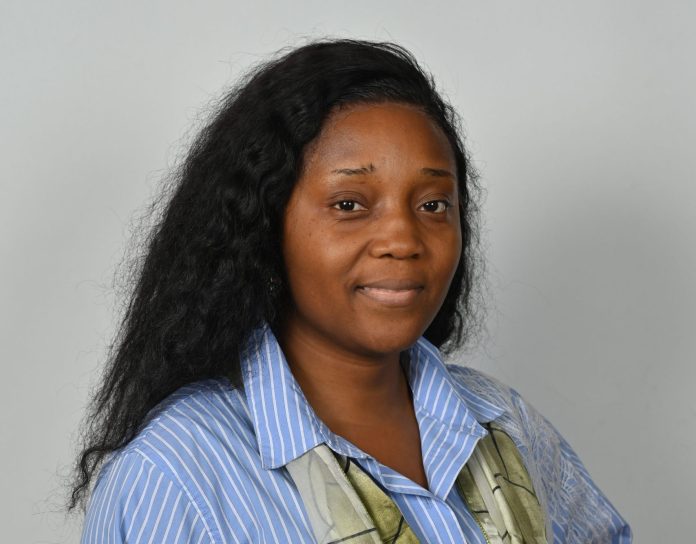
 

Meet Kevine Nokam, Leadership Africa Cohort 6

0

Editor’s note: Kevine Nokam is a member of Leadership Africa Cohort 6.

Joining ALG’s public speaking class was one of the most transformative decisions I’ve ever made—and I say that with deep conviction, because it has changed not just how I speak, but how I see myself, how I carry myself, and how I show up in every area of my life.

Before this class, public speaking was something I feared. I would overthink every word, doubt my ideas, and sometimes choose silence over expression. It wasn’t because I didn’t have anything to say—I did. I had knowledge, experiences, and value to share.

But like many of us, I grew up in a culture where humility is emphasized. And while humility is a beautiful value, I slowly realized that it can sometimes hold us back when it teaches us to stay quiet, to shrink, or to wait to be invited to speak.

This class helped me understand a powerful truth: being humble does not mean being invisible. If you don’t learn to speak for yourself, no one else will do it for you the way you deserve.

In this space, I was given something I didn’t even realize I needed—a safe environment to grow. A space where I could try, fail, improve, and try again without judgment. A space where my voice mattered, even when it was shaky at first. And little by little, something shifted.

I started speaking more.
I started believing in what I was saying.
I started owning my voice.

Today, I am doing things I once thought were completely out of reach for me. I lead seminars. I host webinars. I confidently educate people about what I do. I show up as an expert in my field without second-guessing myself every minute.

As a realtor, this transformation has been incredibly visible. There was a time when I avoided hosting open houses because it required me to engage, present, and speak continuously with strangers. It felt uncomfortable. It felt intimidating.

But now? I walk into those same spaces with confidence. I connect with people naturally. I present homes with clarity and authority. I answer questions without fear. I own the room.

That shift didn’t happen overnight—it happened because I was in an environment that challenged me while supporting me at the same time.

What makes this class truly special is that it is more than just a place to learn how to speak—it is a place to heal insecurities. Many of us come with doubts, fears, and limiting beliefs shaped by our upbringing, our culture, or past experiences. This class creates a safe space to confront those things and grow beyond them.

There is no judgment here—only encouragement.
No competition—only elevation.
No pressure to be perfect—only permission to grow.

And beyond the skills, there is something even more powerful that I gained: community.

I built genuine, meaningful, lifelong friendships. These are not surface-level connections. These are intentional relationships with people who are also committed to growth. We check on each other. We uplift each other. We challenge each other to do better. We celebrate each other’s wins, big and small.

It is rare to find a space where people genuinely want to see you succeed—and this is one of those spaces.

Being surrounded by other Africans has also been deeply impactful. There is something powerful about being in a room where people understand your background, your values, your struggles, and your potential. We learn from each other’s stories, perspectives, and journeys. We grow together.

At the same time, this class is not limited to Africans—it is inclusive. People from different backgrounds join, contribute, and grow alongside us. That diversity makes the experience even richer, because it allows us to expand our thinking while staying rooted in who we are.

And honestly, one of the most incredible parts of all of this is that the class is completely free.

Access to this level of transformation—confidence building, personal development, communication skills, and community—without any financial barrier is something truly special. It means that anyone who is willing to grow has the opportunity to step into this space and change their life.

And for me, that is exactly why I chose not to stop.

This is why I made the intentional decision to join Leadership Africa Cohort 6.

Because I realized that this journey is not just a one-time experience—it is a continuous transformation. I want to go deeper. I want to refine my voice even more. I want to keep growing, keep learning, and keep becoming a stronger, more confident version of myself.

I am committed to being part of this transformative African movement—one that is helping us reclaim our voices, break through limitations, and step fully into our power. A movement that reminds us that we are allowed to speak, to lead, to influence, and to be seen.

This class didn’t just teach me how to speak.

It taught me how to believe in my voice.
It taught me how to stand with confidence.
It taught me how to express myself without fear.
It taught me how to take up space unapologetically.

And for that, I am deeply, truly grateful.

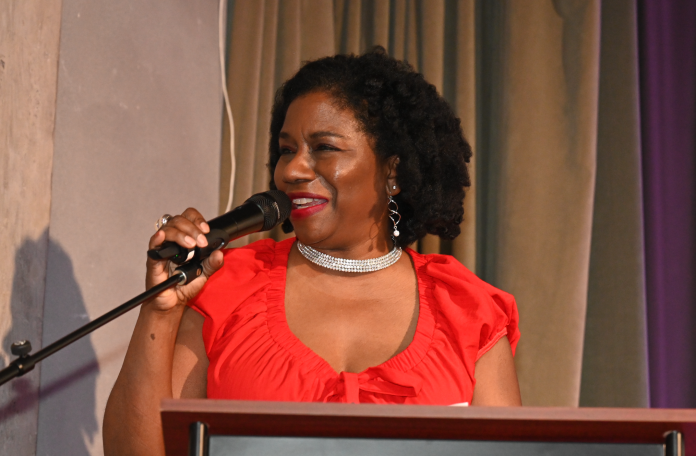
Photo Gallery – International Women’s Day 2026

0

From our mothers’ hands to our daughters’ futures

0

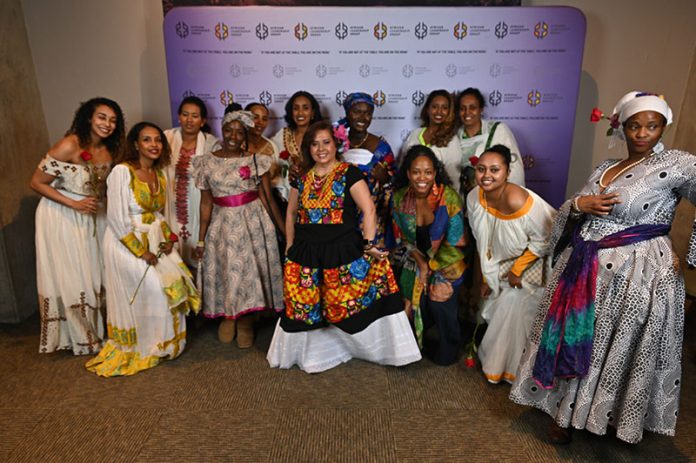
For the 230 people who attended the African Leadership Group International Women’s Day celebration — and everyone who wishes they had — it was one of those rare moments when a theme stopped being a tagline and became real.

That’s what unfolded at the sold-out event at the Denver Botanic Gardens. The room was full. The energy was warm. And there was something else in the air: reflection.

Not just on how far women have come, but on what comes next, and our shared responsibility for carrying it forward.

Keynote speaker Dana Manyothane set the tone immediately, challenging the idea of self-made success:

“We are not self-made. We are mother-made. Community-made. Legacy-made.”

The room was still.

In a single idea, she dismantled the myth of individual success and replaced it with inherited strength, and the responsibility that comes with it.

She asked the audience to picture something simple: hands—those of mothers and grandmothers who worked double shifts, prayed, carried, and held entire families forward. Everyone in the room could see those hands in their own lives.

The message was clear: What has been inherited must now be reinvested.

Leadership, as she framed it, is not about visibility or status. It is about responsibility, especially for those who now have access that previous generations fought for but never fully experienced. Previous generations may not have entered every room, but they prepared this generation to do so.

Now that those doors are open, the question becomes unavoidable: what will be done with that access?

Dana grounded the message in something deeply personal.

“As a mother of daughters, I am no longer just inheriting legacy. I am actively shaping it.”

Because someone is always watching; not just what is said, but how leadership is lived. How decisions are made. How rest is modeled, or not modeled at all.

Through that lens, leadership becomes less about title and more about example. Not position, but responsibility: to widen doors, to name inequity, and to create access and opportunity with fearless intentionality.

This is not abstract. It shows up in real decisions: Who gets funded, who gets seen, who is supported, and who is positioned to lead next.

She emphasized leadership is not a sprint. It is a marathon, requiring pacing, community, and endurance to move through discomfort. The work is often slow. Sometimes invisible. At times, exhausting.

And still, it matters.

Some of what is built today may not be fully realized in this generation, but it will be in the next. Leadership that does not extend beyond the individual is not legacy; it is ego.

That is where the responsibility sharpens.

“Our mothers passed down survival. We must pass down sustainability.

They passed down endurance. We must pass down equity.

They passed down access. We must pass down ownership.”

By the end of the night, the theme of the event had shifted from something to admire into something to carry. A personal charge. A collective responsibility.

As Manyothane reminded the room:

“We are both someone’s daughter and someone’s ancestor in the making.”

And with that, no one is off the hook.

Everyone carries something.

The only question is what will be done with it, and what it will look like when it is passed forward.

Read Dana Manyothane’s full keynote address HERE

Leadership Africa alumni honored for community impact

0

Two graduates of African Leadership Group’s Leadership Africa program were recently recognized with prestigious community awards, highlighting the growing impact of ALG alumni across Colorado’s civic and community leadership landscape.

Ousman Ba Receives AAWMAD Award

Ousman T. Ba, Program Director at African Leadership Group and a Leadership Africa Cohort 1 graduate, was recently honored with the AAWMAD Award (African Americans Who Make a Difference) from Denver Urban Spectrum.

The award recognizes individuals who demonstrate outstanding community service, leadership, and integrity while making meaningful contributions to their communities.

In reflecting on the honor, Ba spoke about the shared history between African immigrants and the broader African American community, acknowledging the sacrifices of earlier generations who helped open doors for others.

“As an African immigrant who grew up and was raised in this country, I spent many years navigating questions of identity,” Ba wrote in a public reflection following the award. “What I know with certainty is that the opportunities I have today would not exist without the sacrifices, courage, and resilience of Black Americans who paved the way before us.”

Ba has been a central figure in African Leadership Group’s programs, working closely with community members, young leaders, and immigrant families. His leadership has helped strengthen ALG’s efforts to build civic engagement and community connection across Colorado’s African diaspora.

Bianka Emerson Receives Congressional Recognition

Bianka Emerson, Executive Director of the Colorado Black Women for Political Action (CBWPA) and a Leadership Africa Cohort 5 graduate, was recently honored with a Special Congressional Recognition from the office of Congressman Joe Neguse.

The recognition is part of an annual award presented in honor of Gloria Tanner, founder of CBWPA and the first Black woman elected to the Colorado State Senate. The award recognizes individuals who are leading impactful community outreach and political engagement efforts.

Emerson’s leadership has been instrumental in advancing civic participation and political engagement among Black women across Colorado. Through her work with CBWPA, she has helped mobilize voters, support leadership development, and strengthen community advocacy.

Her recognition reflects a continuing legacy of Black women’s leadership in Colorado’s civic and political life.

A Reflection of Leadership Africa’s Mission

For African Leadership Group, these recognitions represent more than individual achievements—they reflect the broader mission of Leadership Africa, the organization’s flagship leadership development program.

Leadership Africa equips emerging leaders from the African immigrant community and beyond with the tools, networks, and confidence to engage in civic life, advocate for their communities, and lead meaningful change.

Seeing alumni like Ba and Emerson recognized for their work underscores the program’s growing influence. Their honors serve as an inspiring reminder that leadership development, when rooted in community and purpose, has a ripple effect that strengthens institutions, uplifts communities, and sets a powerful example for the next generation of leaders.

The road to helping drivers: Policy changes must strengthen rideshare drivers’ opportunities — not shrink them.

0
Closeup of unrecognizable black man hands driving luxury car, panorama with copy space. Cropped of african american driver holding hands on steering wheel, driving brand new nice automobile

Over the years, I have spoken with thousands of immigrants across Colorado who are working every day to build stability, support their families, and create opportunity in a new country.

In those conversations, rideshare driving comes up again and again.

For many immigrants, driving for rideshare platforms has become one of the most accessible ways to earn income while pursuing other goals. Some drivers support their families while completing degrees. Others drive while building small businesses. The flexibility of the work has helped many people navigate periods of transition while continuing to move forward.

At the same time, drivers speak openly about the challenges.

Some say their earnings are less predictable than they once were. Others worry about changes in ride demand or how pricing affects what they ultimately take home. These concerns deserve attention, and policymakers are right to think seriously about how to improve economic opportunities for drivers.

But good intentions are not enough.

The real question is whether proposed policy changes will actually improve outcomes.
In many industries, policies designed to help workers can sometimes produce unintended consequences. When regulations significantly alter the economics of a service, the effects ripple outward in ways that are not always obvious at first.

If rides become significantly more expensive, fewer people use them.

If fewer people use them, there are fewer trips available for drivers.

And when trips decline, earnings decline.

For drivers who rely on this work to support their families, that is not progress.
Within immigrant communities across Colorado, rideshare platforms play a dual role. Many individuals depend on them as drivers, while many families also rely on them as riders to reach workplaces, schools, and medical appointments.

For many newcomers building their lives in Colorado, rideshare work has become one of the few economic opportunities that offers both immediate income and the flexibility to pursue education, entrepreneurship, and long-term career goals.

That is why policy debates about rideshare should focus not only on intentions but on outcomes. Policies meant to help drivers must ultimately expand their economic opportunities while ensuring services remain accessible to the communities that depend on them.

When lawmakers consider changes that could reshape the rideshare economy, the question should be simple: Will this policy create more opportunity for drivers—or less?

Drivers deserve policies that expand their ability to earn, not policies that unintentionally take those opportunities away.

Breaking Barriers event promoted collective healing

0

“No, we’re not a monolith, but that sameness is what gives us our power … .that belonging is our love, it’s our grace…the essence of who we are, that is what I think about when I think about belonging.”Dr. Ryan Ross 

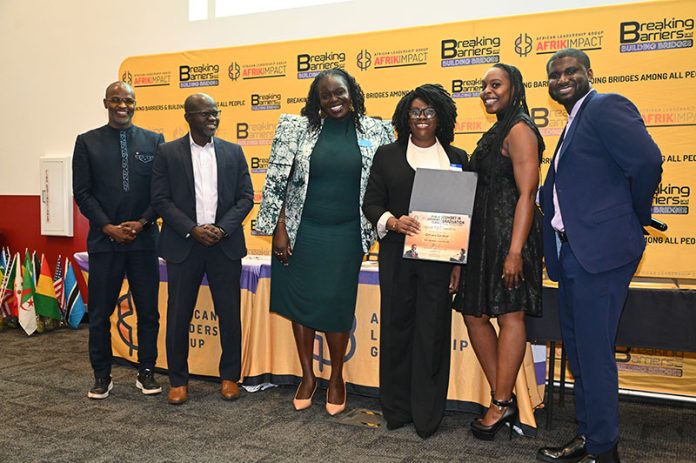
On the first Saturday of Black History Month, ALG hosted a Breaking Barriers & Building Bridges event, a gathering designed to confront and heal the divide between the Black community and the African community. 

Though separated by an ocean, the distance between our two communities has often felt much wider. Misunderstanding often goes unspoken because of what has shaped our differing histories and lived experiences. 

As someone who resonates deeply with both communities, I walked into the space expecting difficult conversations and tensions too thick to cut with a knife. But instead, there was something far more powerful, collective healing. Not tension, but tenderness. Not defensiveness, but dialogue; open and honest dialogue. 

ALG Founder and Executive Director Papa Dia grounded the event with a simple yet powerful reminder: “ We are here as human beings.” Titles were set aside as the goal was not hierarchy but humanity. The space was framed as one of shared celebration and shared responsibility to commemorate Black History Month. 

Through grounding and healing activities led by LaTerrell Bradford, we were invited to place empathy and forgiveness in our “toolbox,” to listen to understand not respond and to honor one another’s humanity. These principles shaped the atmosphere of healing and belonging the entire day. 

Keynote speaker, Dr. Ibrahima Seck, Director of Research at the Whitney Plantation Slavery Museum, brought a critical historical depth to the conversation. He challenged us to remember a history beyond slaverly emphasizing how our histories are shared and carry on even when we are oceans apart. 

He challenged us to remember more than trauma and recognize education as a bridge to a healed diaspora. A healthy Black diaspora can only come about when we realize the power within us and activate it with historical clarity. Without understanding the full scope of our shared and distinct histories, our unity cannot stand. 

Throughout the panel and table conversations, recurring themes emerged from leadership beyond titles, to healing as a collective responsibility, and youth observing what we model to the importance of unity without erasure. We collectively recognized that we are not a monolith, as Dr. Ross said, but our power lies in the undeniable sameness. Recognizing it and claiming it for what it is, is what forms the foundations of belonging not within our individual communities but with one another. 

I had the opportunity to join the table conversation with the topic “First-Generation, Pressure & Possibility.”  I heard the topic and expected my peers, the children of immigrants, to flock to the table as I did. 

To my surprise, I saw parents at the table, I was taken aback not realizing that they are first generation too. I took a moment to listen, hearing them share the difficulties in their experience being the first in their family to come to America. The pressures and expectations they carry to send money back home, to offer guidance, and help others find their way. 

I had been so fixated on my experience as a child of immigrants, the difficulties of living between two worlds, that I overlooked the struggle in the experience that they had. In that moment, perspective shifted. I began to understand  that for many, the decision to come here wasn’t one of free and open choice but one of survival, full of pressures and responsibilities. 

One of the most powerful moments of the day was the launch of ALG’s Cultural Passport initiative. 

Rather than leaving unity to chance, ALG’s Cultural Passport formalizes connection. Featuring 24 partner organizations across Colorado that span culture, business, advocacy, health and the arts, the passport encourages community members to attend one another’s signature events, collect stamps, and actively participate across organizations. 

As ALG advisor Jason Gaulden said when introducing the passport, “Instead of being in a mindset of ‘we gotta help ourselves,’ we’re bringing this in as a collective community and saying let’s all help each other. Everybody promotes and supports each other.” 

Historically, organizations serving similar communities can operate in isolation, sometimes leading to quiet competition. The Cultural Passport disrupts that isolation completely, replacing competition with collaboration allowing us all to belong to the broader community, not just one organization, but them all. 

Supported in part by Belonging Colorado, this pilot year of the Cultural Passport aims not only to increase attendance across events, but to deepen relationships across communities. 

The most surprising element of the day was the absence of conflict. In conversations about the diaspora, tension is expected. But instead, everyone approached one another with curiosity, openness, and understanding. They asked before assuming, listened before speaking, allowing the thick wall between Black American and African Immigrant communities to feel thinner than ever. 

This gathering demonstrated clearly that the divide between us is just one sincere conversation away from breaking. Though an ocean separates us, our histories, cultures, values, and aspirations are deeply intertwined. 

Breaking Barriers & Building Bridges is not simply an initiative or an event. It is a reminder that belonging is not automatic, it is intentional. When we choose to build together, the bridge becomes stronger than any barrier that once stood. 

Reflections on ALG’s Public Speaking Class Cohort 18

0

Editor’s note: The two short pieces below were written by recent graduates of ALG’s Public Speaking Class Cohort 18. 

Mustafa Gemeda was born in the Oromia Region of Ethiopia and immigrated to the United States in 2000, to pursue his education. Mustafa has gained diverse professional experience, including several years as a customer service representative and three years as a teacher’s assistant in Minnesota. After relocating to Denver, Colorado, he transitioned into entrepreneurship by starting his own transportation business.

Zeina Toure was born in Senegal and raised outside of Washington, D.C. Zeina relocated to Denver, Colorado, after graduating from college and has built deep community ties. She earned her Master’s of Social Work from the University of Denver and began her career working in hospital settings. Zeina later founded New Phase Navigation, a private case management and healthcare consulting company that supports adults experiencing health transitions.

Public speaking: A transformative life experience

By Mustafa Gemeda

Being part of the African Leadership Group (ALG) has been more than just participating in a leadership program—it has been a transformative life experience.

ALG is a truly diversified organization. It brings together individuals from different professional backgrounds, cultures, and life journeys, creating a powerful environment where ideas, perspectives, and experiences intersect. This diversity is not only inspiring but deeply enriching. It allows us to grow beyond our own limitations and see leadership through a broader, more inclusive lens.

Mustafa Gemeda

What stands out most to me, however, is that ALG is more than an organization—it is a family. The bonds built here go beyond networking or professional collaboration. We form strong family ties rooted in trust, encouragement, and shared ambition. The sense of belonging creates a safe space where we can challenge ourselves, support one another, and celebrate each other’s progress.

The Public Speaking Class has inspired many lives, including mine. Through the sessions, mentorship, and peer interactions, I have rediscovered the power of intentional leadership and continuous learning. ALG encourages us to reflect deeply, act boldly, and lead responsibly in our communities and businesses.

One of the most impactful initiatives is the offering of free classes, such as Public Speaking Class Cohort 18. These opportunities make leadership development accessible to those who want to recapture and strengthen their business mindset. It reflects ALG’s genuine commitment to empowering individuals—not just those who can afford it, but anyone who is ready to grow.

For me, ALG has reignited my passion for growth, sharpened my business thinking, and strengthened my belief in the power of community. I am grateful to be part of a movement that is not only shaping leaders but building a lasting legacy of collaboration, empowerment, and impact across Africa and beyond.

Public speaking class: A journey in self-development

By Zeina Toure

There aren’t enough words to describe the impact of ALG’s public speaking class. From the moment I walked in, I sensed that the next 12 weeks would be transformative — and they truly were. The professor (Madiama) and facilitators (Tee, Uzi) create an environment that is empowering, supportive, nurturing, and honest all at once.

Zeina Toure

This class is far more than a public speaking course; it feels like a journey in self-development. You leave with practical tools and skills that build confidence and presence. The professor challenges you in a way that reflects genuine care, and every participant is given the opportunity to shine.

Personally, ALG’s public speaking class reconnected me with parts of myself I had lost touch with while introducing me to new strengths I didn’t know I had. I highly recommend this class to anyone looking to grow professionally or personally. It’s also an incredible way to build meaningful friendships. I found myself inspired by every new person I met.

Photo Gallery – Public Speaking Graduation 2026

0

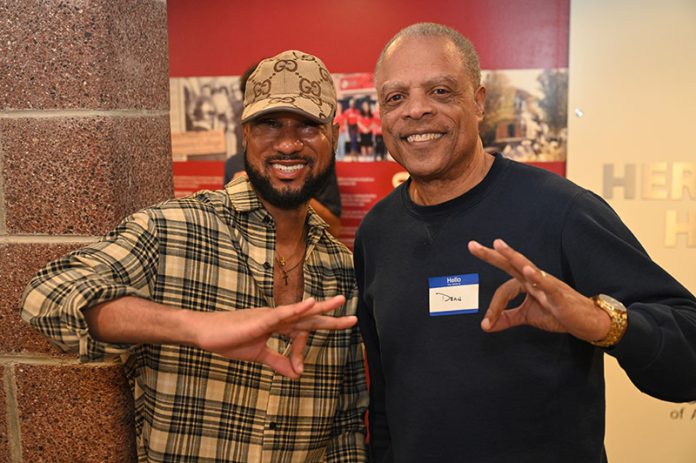
Photo Gallery – Black History Month celebration: Breaking Barriers & Building Bridges

0