

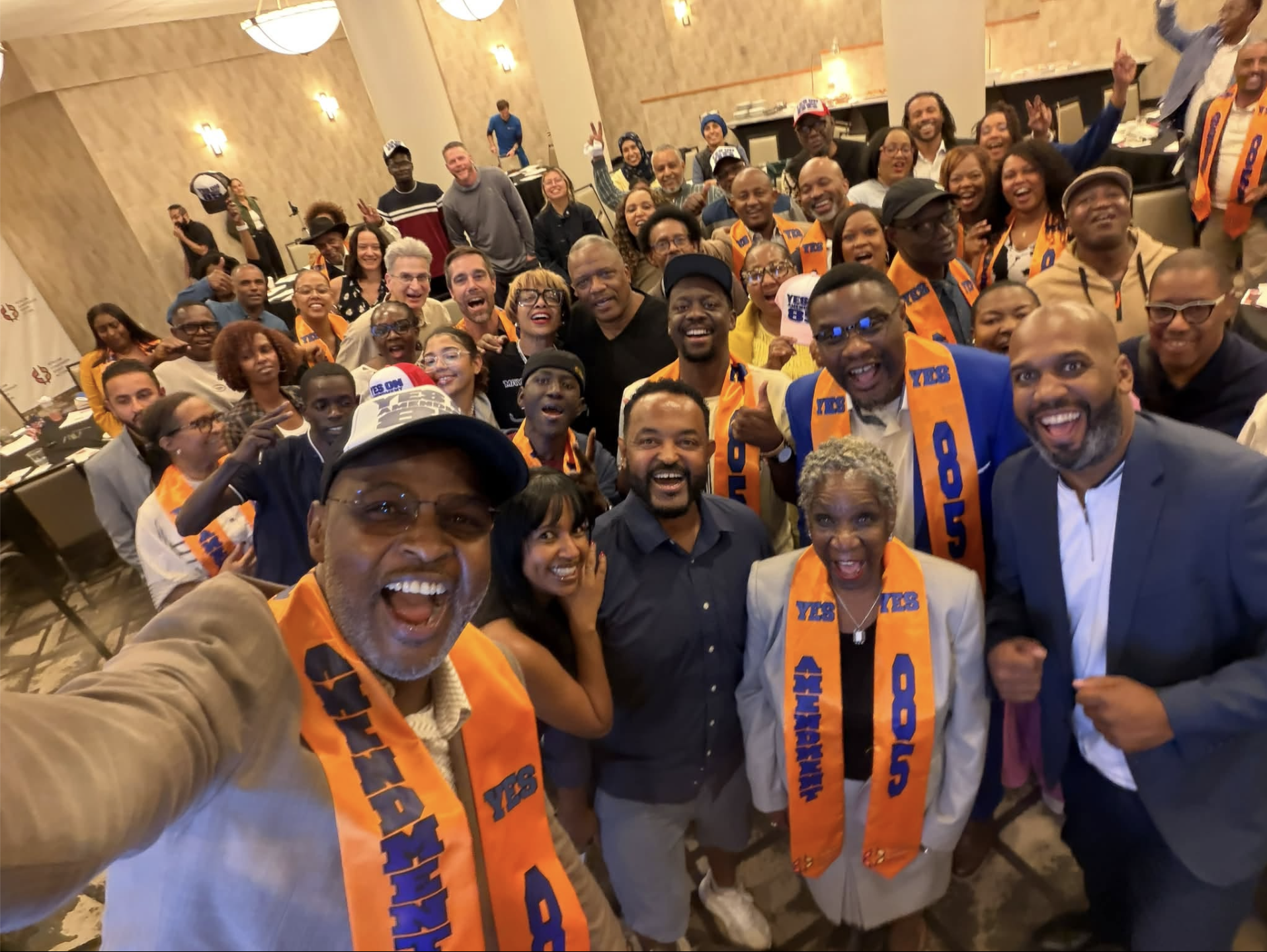

The smiles in ALG Founder and Executive Director Papa Dia’s audience selfie at the top of this article tell part of the story. The comments on his social media post tell another.
On Tuesday, October 6, African Leadership Group Action gathered approximately 100 people who support Amendment 85, which would create a constitutional requirement that Colorado ballot titles be written in plain language at an eighth-grade reading level or below.
Amendment 85 is on the November ballot, which you may already have received by mail, or will be receiving any day now.
The photograph captured the evening’s energy: people standing together, raising their hands and making their support visible. Their comments on papa’s post revealed the reasons behind that support.
“Every voter should be able to understand what they are voting for,” wrote Amani Ali.
Elizabeth Munoz connected understanding with community strength: “Informed voters make strong communities. Everyone should be able to clearly understand the impact of their vote.”
Another commenter described encouraging young adults to vote, only to hear that the ballot was too confusing. Others emphasized the importance of understanding what a “yes” or “no” vote would mean.
The event, and Papa’s post about it, brought those concerns into the conversation. For the people sharing their experiences, ballot language affects how confidently they approach decisions that matter to their families and communities.
Amendment 85 would also prevent new laws from requiring wording that makes citizen-initiative ballot titles harder to understand. Current state law already requires plain language, but does not specify a reading-level standard.
Supporters say the amendment would make that standard clearer. Opponents question whether it is needed and whether it could leave important information out of ballot titles. The state’s Blue Book explanation outlines the proposal and arguments on both sides.
Tuesday’s gathering was a working session for the amendment’s supporters. The program that evening offered several ways to share their views: personal statements, social-media posts, writing, photographs and short video messages in their preferred languages.
People were invited to speak in their own words. What matters to you? Why do you care? What would you want a neighbor to understand? Those questions made room for different experiences and personal reasons.
Papa’s selfie carried that conversation beyond the room. Beneath a photograph full of smiling faces, people wrote about confusing ballots, informed choices and the neighbors they encourage to vote.
Public policy can feel distant until someone explains how it touches their life. A conversation with a young voter. A question about unfamiliar wording. A moment of uncertainty over what a vote would actually do. These are experiences people recognize.
About 100 people made time to come together, share their views and hear from one another. Their energy filled the room. Their comments gave others something to think about.
Helping people find their voices is central to the African Leadership Group’s work. People need room to ask questions, understand their choices and speak for themselves. That matters whatever position they take on a ballot measure.
Papa’s photograph captures the joy of the evening. The words beneath it show why people came. They had something to say, and they wanted to be heard.