
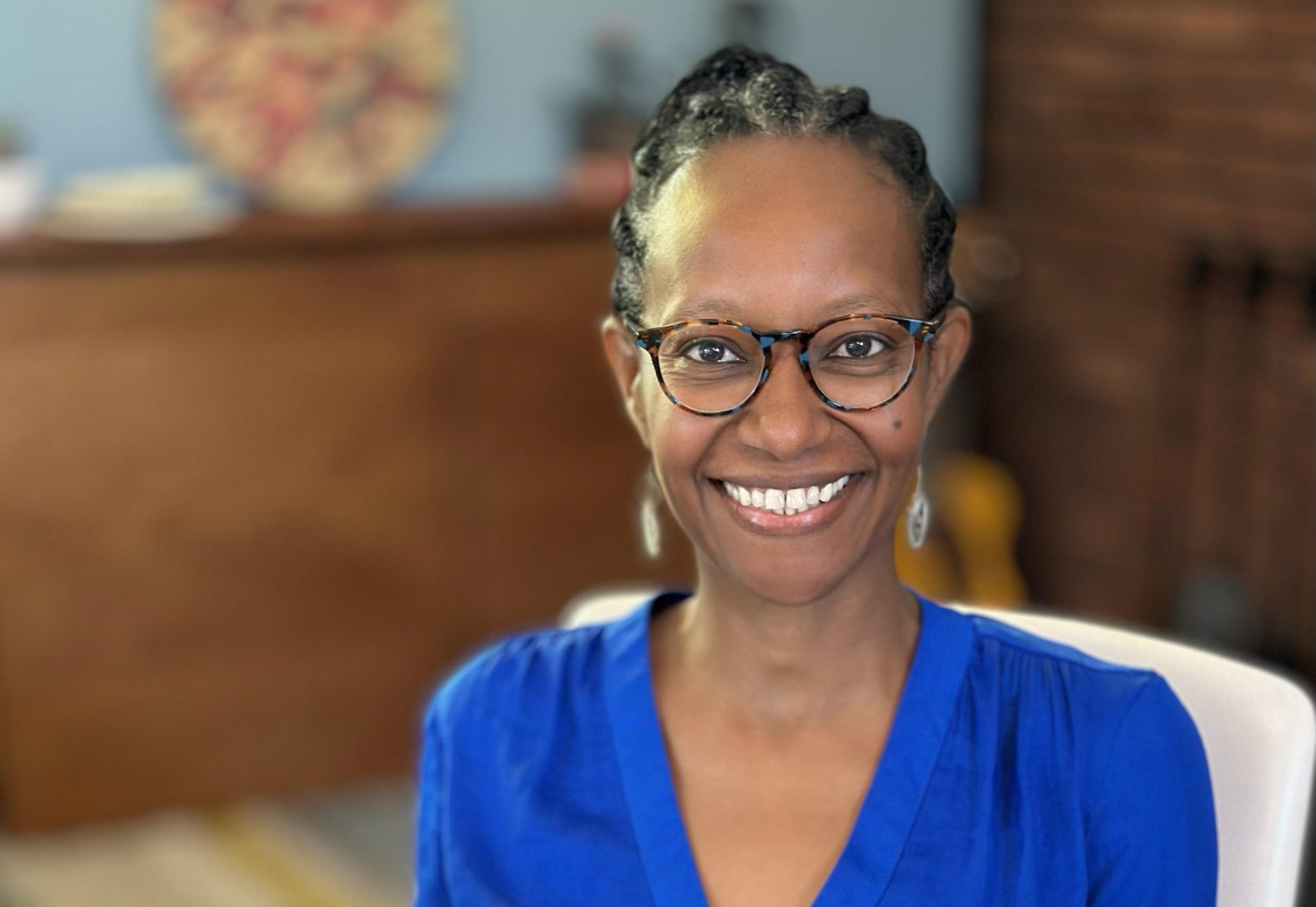

Editor’s note: The following article was written by Dr. Amen Sergew, a member of Leadership Africa Cohort 6
Growing up in Ethiopia shaped me in profound ways. I was raised by a remarkable family.
My father was a historian and deeply patriotic. My mother, whom I would describe as overflowing with love, instilled in us a strong moral compass. My older sister is a creative force who marches fiercely to her own rhythm.
My three older brothers taught me resilience and how to regulate my emotions when it mattered. My grandmother, the family matriarch, demonstrated what it meant to build and run successful businesses and manage real estate through sheer wisdom and determination despite being unable to read or write. She kept the books all in her head.
In 1987, I moved to the United States at the age of thirteen. African immigrants were a rare presence in my adopted community. Much of what people understood about Africa, and Ethiopia specifically, was filtered through narrow media portrayals, often centered on famine and hardship. This created a stark disconnect between my lived experience and how others perceived me.
That gap became a defining force in my life. It cultivated resilience, independence, and the ability to navigate different cultural contexts. As a newcomer navigating the margins, I learned to be comfortable in unfamiliar and uncomfortable spaces. I came to believe that something sacred and beautiful lives in every human interaction, though it may not always be easy to see.
At the same time, I became introspective and philosophical, grappling with questions of history, recognition, and meaning. If Ethiopia’s rich and ancient history is not widely known, does that diminish its significance? Does a story require recognition to be legitimate?
These reflections deepened my sense of self. I came to understand that identity is not contingent on recognition by others, but rather grounded in self-awareness and internal validation.
Over time, I have come to appreciate just how difficult that early transition was. Arriving in a new country at a formative age brought challenges including poverty, invisibility, and being underestimated. Yet those experiences became a crucible that sharpened my perspective and strengthened my resolve. I drew inspiration from my family and Ethiopian ancestors, as well as from the legacy of African Americans whose struggles and achievements expanded opportunity for others.
With determination and support, I pursued higher education, ultimately attending medical school and specializing in Pulmonary and Critical Care Medicine. My career in academic medicine has spanned many years, during which I developed clinical expertise and a broader understanding of patient care.
Along the way, I built a life with a kind and thoughtful husband who has been a steady source of support and comes from a line of curious and inclusive Americans. I am also grateful for my stepdaughter, who has embraced me with openness and joy despite our different backgrounds.
Now, at mid-career, I am stepping into a new chapter that integrates the full arc of my personal and professional journey.
I recently founded Integrative Pulmonary Clinic, a practice grounded in combining Eastern and Western approaches to care, particularly for patients with lung disease. My approach emphasizes hope and patient empowerment, guided by the words of Hippocrates, the ancient Greek physician, that “the natural healing force within each one of us is the greatest force in getting well.”
This new venture brings both excitement and challenges. Entrepreneurship has pushed me to think differently, to build something aligned with my values, and to reimagine what healthcare can look like on a more intentional scale. In many ways, the clinic represents a microcosm of my broader vision for medicine in the United States, one that not only incorporates advanced treatments while also prioritizing “healthspan” (a long and healthy life) inspired by the wisdom of community, culture, and the natural world.
As I step into this next phase, I am committed to continued learning, growth, and collaboration.
Joining the new cohort of Leadership Africa represents an opportunity to engage with peers and mentors who share a commitment to impact and leadership. The kick-off sessions were thoughtfully planned and executed to create kinship and connection while equipping us with tools that strengthen our capabilities and address our weaknesses.
In the coming months, I will approach our time with humility and clarity of purpose, seeking both to contribute and to evolve. For me, each day remains an opportunity for self-healing, reflection, and the possibility of building something that matters.