
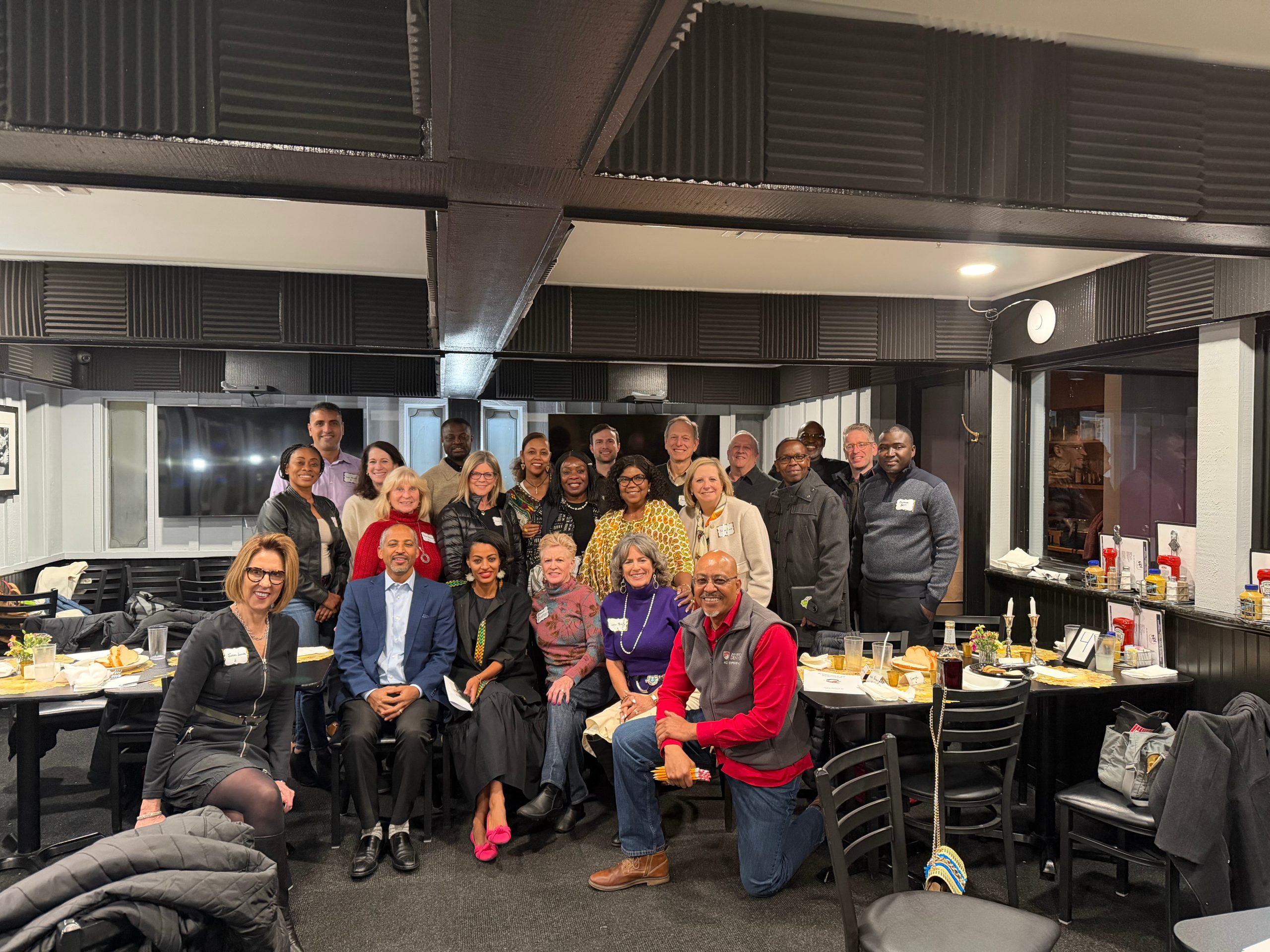

The first time Adetola Obiwole sat down with members of Denver’s Jewish community, she wasn’t sure what to expect.
A Nigerian-born doctor of pharmacy who had been in Colorado since 1996, she had encountered Jewish people in passing over the years, but never in any sustained way.
That changed last fall, when Dr. Tola (as she prefers to be called) joined a small gathering at the African Leadership Group’s offices in Aurora. About 20 people filled the room, roughly half African immigrants, half Jewish, brought together by an initiative called Breaking Barriers and Building Bridges.
Susan Levine, a member of the Anti-Defamation League’s regional board, had become deeply involved with ALG, participating in their Leadership Africa program and eventually teaching English classes to newly arrived migrants. When Papa Dia, ALG’s founder and executive director, launched Breaking Barriers in 2023, the Jewish community became one of the first groups to join the effort.
What followed was a series of carefully orchestrated encounters, facilitated by Effley Brooks, a leadership development specialist. The format was deceptively simple: food, conversation, exercises designed to reveal rather than conceal difference.
David Frieder, who serves on the ADL regional board, described the first session. After a shared meal featuring dishes from various African traditions, the group broke into smaller clusters of five or six people. Brooks posed questions designed to force participants out of their comfortable assumptions.
For Frieder, a secular Jew who describes himself as “far more community oriented” than religiously inclined, the conversations revealed fascinating differences.
During one exercise, participants discussed how they spent their spare time. Many of the Jewish participants, Frieder said, mentioned skiing, outdoor activities. The African immigrants spoke of faith-related pursuits.
“It was so different,” Frieder said. “It showed some real differences on how we look at the world.”
The sessions moved beyond abstraction when the Jewish community hosted a reciprocal gathering. They brought temple practices into the space, offering a glimpse of Shabbat observance, and served traditional foods.
“It was an eye opener for me, because I’ve never been around Jews,” Dr. Tola said. “I’ve never been in their temple.”
What struck her most was not the religious instruction but the personal connection. The Jewish participants seemed genuinely invested in building relationships that would outlast the formal sessions.
“Unlike when you meet people and they say, ‘Oh yeah, call me anytime, blah, blah, blah,’ and it just ends there, these people actually didn’t end there. They really wanted to have a relationship and a conversation with you,” she said.
For Dr. Tola, this represented a departure from what she had come to expect. “Because of my general understanding of how people behave in this country, by race or color, how they relate with you on the surface. It’s just transactional. But these individuals showed the human face and genuineness.”
The initiative has since paired participants for one-on-one meetings. Frieder met with Samuel, a Kenyan pastor who runs two orphanages for girls back home. Their conversation stretched over several hours.
“Seeing his deep, deep beliefs, religious beliefs, and the reliance on his faith,” Frieder said. “That’s not me. I’m far more community oriented.”
This encounter with sincere religious conviction left an impression on Frieder, who acknowledged the gap between his own secular orientation and Samuel’s world.
The initiative continues, with both Frieder and Dr. Tola committed to staying involved. For Frieder, the goal is building relationships that could prove meaningful “particularly in those times when it gets especially challenging, like now.”
Dr. Tola sees the work as a correction to the human tendency toward stereotyping. “As human beings, we just generalize,” she said. “But on the individual level, there’s still some people who are really good and whom you can relate with, even though they don’t look like you, they don’t talk like you, didn’t have the same cultural background as you.”
The Breaking Barriers model was first employed with meetings between the African immigrant and African American communities. Papa Dia intends for it to expand to other communities, though he favors keeping each exchange focused rather than bringing many groups together simultaneously. The intimacy is the point.
So the facilitated conversations will continue.The food will keep coming. And people who might otherwise never meet are attempting something unfashionable: patient, sustained attention to the stranger across the table.